Accra Hosts Successful Regional Training to Strengthen Rotavirus Surveillance in West Africa

Rotavirus, the leading cause of severe acute diarrhoea in infants and young children worldwide, remains a major public health challenge in West Africa. In settings where vaccines are not yet available, rotavirus accounts for up to 60% of severe acute diarrhoeal disease in children under five, often leading to preventable hospitalizations and deaths. Tackling this silent killer requires not only vaccines but also strong surveillance systems, quality laboratory testing and cross-country collaboration.

From 26–29 August 2025, experts from Ghana, Nigeria, Guinea, and Niger gathered in Accra at the Rotavirus Regional Reference Laboratory (RRRL), Noguchi Memorial Institute for Medical Research. With support from WHO and partners, participants underwent intensive capacity-building training on rotavirus surveillance, laboratory diagnostics and data management.

The training came at a crucial time. Ghana, which has been at the forefront of rotavirus surveillance in the subregion, has made significant progress in tracking cases, ensuring timely reporting, and strengthening laboratory confirmation. The presence of the RRRL in Ghana has positioned the country as a hub for regional learning and technical support, enabling neighboring countries to benefit from Ghana’s expertise and established systems.
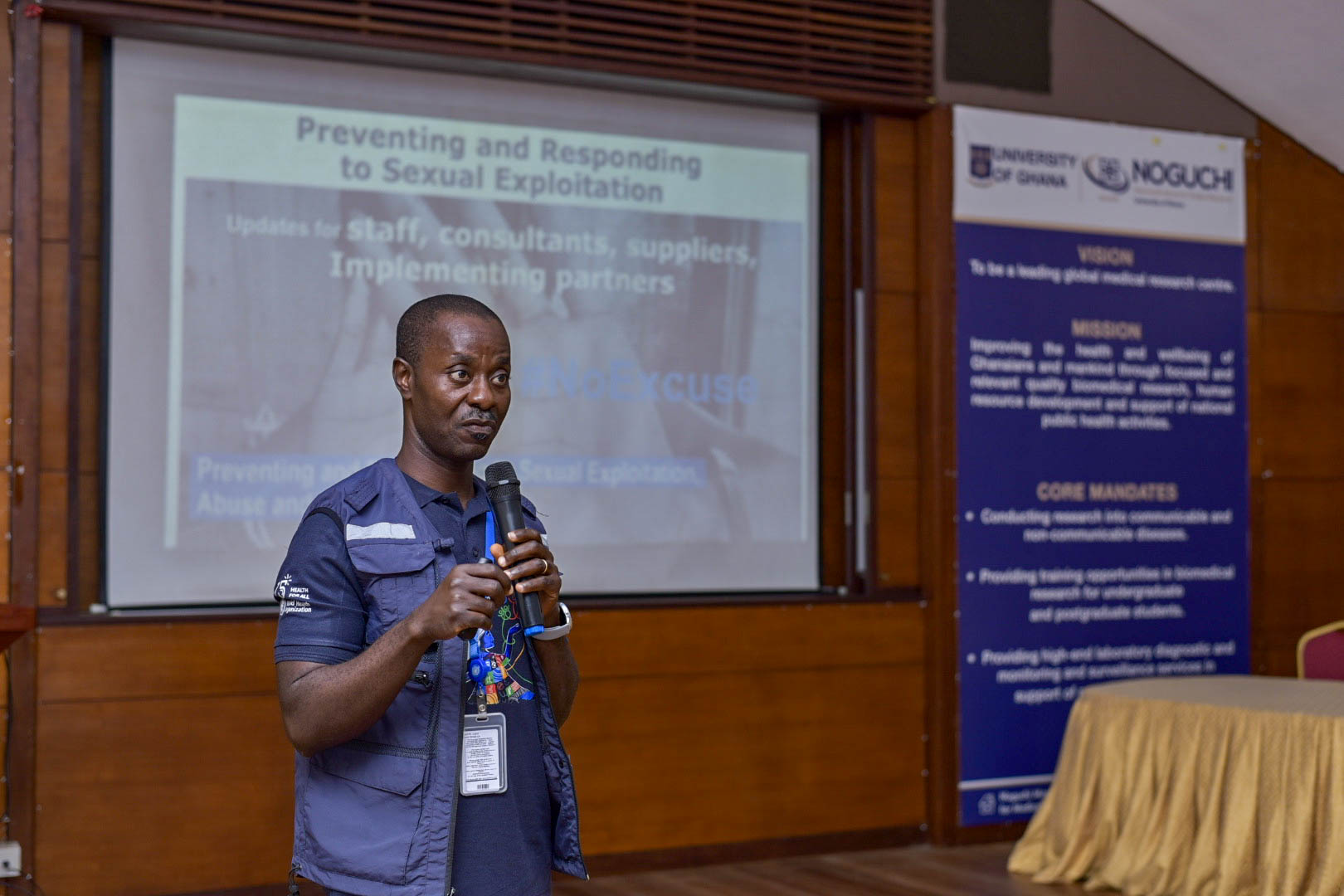
Photo @Abdul-Rahim Naa Abdul-Lahie/WHOGhana
Speaking at the training, Dr. Michael Rockson Adjei, Vaccine Initiative Officer for WHO Ghana, emphasized the need for enhance surveillance. “By equipping countries in the subregion with the skills and tools they need, we are strengthening the region’s collective ability to protect children from rotavirus and other vaccine-preventable diseases”, he said.
Photo @Abdul-Lahie Abdul-Rahim Naa/WHOGhana
In his remarks, Professor George Armah, the RRRL focal point and the lead facilitator underscored the commitment of Noguchi Memorial Institute for Medical Research in strengthening rotavirus sentinel surveillance to facilitate evidence-based decision making on rotavirus vaccination.

“Advocacy for continued use of rotavirus vaccines relies on quality data to show impact, and the RRRL is committed to strengthening laboratory and surveillance capacities at sentinel sites to ensure this evidence is available”, he said.
Photo @Abdul-Lahie Abdul-Rahim Naa/WHOGhana
Nigeria, with its vast population and high burden of diarrhoeal disease, continues to scale up vaccination and surveillance efforts, but still faces challenges with data quality and laboratory capacity. Guinea and Niger, while making strides in vaccine introduction and routine surveillance, also requires stronger laboratory systems and better data to guide decision-making. This training directly addressed those gaps—equipping national surveillance and laboratory officers with the knowledge and tools they need to detect, monitor and respond more effectively.
Photo @Abdul-Lahie Abdul-Rahim Naa/WHOGhana
Driven by desires to improve the quality of rotavirus sentinel surveillance in their respective countries, participants demonstrated great enthusiasm throughout duration of the training. Farma Thiam, a laboratory officer working with the Ministry of Health, Senegal envisaged transforming her workplace with the knowledge and experience gained from the training.

“I really appreciate the organization of the laboratory working areas and the meticulous adherence to standard operating procedures. I’m challenged to do the same when I get back home to improve service delivery”, she said.

Over the four days, participants were trained on everything from data management and quality assurance to advanced laboratory techniques, including enzyme immunoassays, RT-PCR and genotyping assays. Beyond technical skills, the workshop emphasized collaboration, peer learning, and building a stronger regional network for rotavirus surveillance.
Photo @Abdul-Lahie Abdul-Rahim Naa/WHOGhana
As rotavirus remains a top cause of severe diarrhoea in young children, the outcomes of this training will extend beyond the four countries represented. A stronger surveillance network means better preparedness for future outbreaks, better monitoring of vaccine impact, and stronger evidence to inform public health decisions across West Africa.
Photo @Abdul-Lahie Abdul-Rahim Naa/WHOGhana
For Ghana, hosting the RRL was both a recognition of its leadership and a responsibility to support the region. For participating countries, it was an opportunity to build skills, strengthen systems, and renew commitment to protecting the most vulnerable, children under five.

Together, these efforts marked another step forward in ensuring that no child dies from a preventable disease like rotavirus.


For Additional Information or to Request Interviews, Please contact:
Abdul-Lahie Abdul-Rahim Naa
Communications Officer
WHO Ghana Country Office
Email: abdullahiea@who.int
Tel: +233 20 196 2393